
Your King Seiko #03
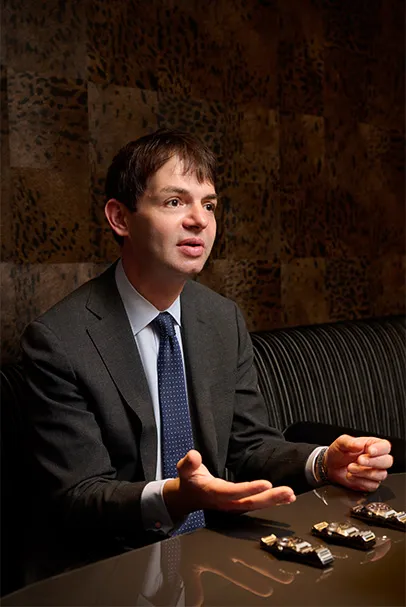
Pianist / Dan Nimmer
The groove of swing and conversation: A world-renowned jazz pianist’s pursuit of a universal style.
Join us for an interview series featuring specialists who resonate with King Seiko. In this installment, we welcome Dan Nimmer, a pianist active on the global stage with the Jazz at Lincoln Center Orchestra. Captivated by the timeless presence of King Seiko, he speaks about his playing style, his view of music, and the philosophy of "rhythm," shared by both timepieces and jazz.
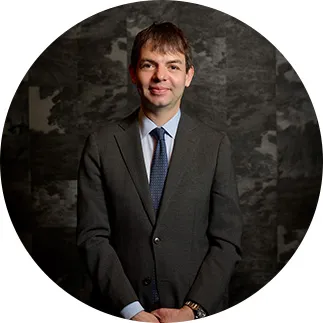
Dan Nimmer
Born in 1982 in Milwaukee, Wisconsin. He began playing the piano in childhood and transitioned to jazz after studying classical music. After studying at Northern Illinois University, he moved from Chicago to New York, where he flourished. In 2005, he was chosen to become a member of the prestigious Jazz at Lincoln Center Orchestra. Armed with an innate sense of swing and astonishing technique, he has performed widely with renowned artists across genres, including Norah Jones. He is highly acclaimed both in the United States and around the world, having released multiple albums as a bandleader on Japanese labels.
Awakening to free expression through improvisation beyond the rules
My father is a drummer—not a professional, but there were always drums in the house from the time I was born. So, my first instrument was actually the drums. I began by simply playing along to the records we had at home. My parents didn’t listen to jazz; instead, the music in our house came from artists like Earth, Wind & Fire, the Ohio Players, and George Benson.
My true musical journey began at the age of ten, when we got a piano. At first, I played by ear, following my father, and eventually I began taking classical lessons. However, I wasn’t always diligent about practicing.
Rather than practicing the assigned pieces exactly as written, I found it far more enjoyable to play simple tunes of my own before lessons, or to improvise and arrange the pieces in my own way. Instead of scolding me for not doing my homework, my classical teacher recognized my creative, rule-breaking side and suggested, “You might be better off studying jazz.”
Meeting such a wonderful mentor—and hearing Oscar Peterson play—proved to be a turning point. The moment I heard him, I knew I wanted to become a jazz musician. To play the piano I love, travel the world, and perform for people—nothing in my life is more rewarding or joyful.
The pride of the rhythm section, harmonizing 15 unique personalities
I moved to New York in 2004, and the following year, in my early twenties, I joined the Jazz at Lincoln Center Orchestra led by Wynton Marsalis. The band has a distinct way of playing and a rich history, built on a tradition we continue to uphold.
The group has evolved significantly since I joined. We have 15 members, all strong soloists, as well as composers and arrangers. As the pianist, my role is to accompany others. With 14 musicians around me, each may want something slightly different behind their solo. The rhythm section never stops, and while the role is demanding, I enjoy the challenge of giving each player exactly what they need in the moment.
I have performed with legends across genres, including Norah Jones and Willie Nelson. I’ll never forget when Willie Nelson invited us onto his tour bus—spending time with him is always memorable, given his status as a true icon. Often, you don’t know what to expect until you meet artists of that level, but 95 to 99 percent of the time, they are remarkably down-to-earth—warm, kind, and open, just like anyone else.
I believe that music rooted in older styles is inherently timeless. Many genres have evolved from those foundations—even country music carries elements of the blues. When collaborating with artists from different backgrounds, we focus on what we share, and more often than not, that common ground lies in the blues and a sense of storytelling.
“Swing” and “conversation,”
the unchanging classics of jazz
The thing that stays classic and remains part of jazz tradition, in my opinion, is the swing rhythm. It's what defines jazz. The feeling of the eighth note and the triplet going on at the same time is what makes our music unique. We also have the blues as a form.
But another thing is that jazz is about conversation and listening to others. If you don't have a conversation, if you don't leave room for space, you're not really playing jazz. I play something, the other person listens and reacts to it. It's a give and take. That's what makes our music.
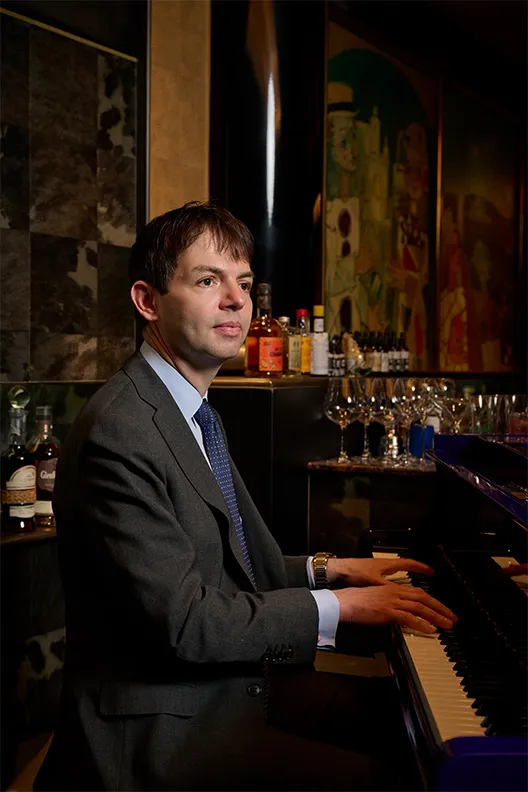
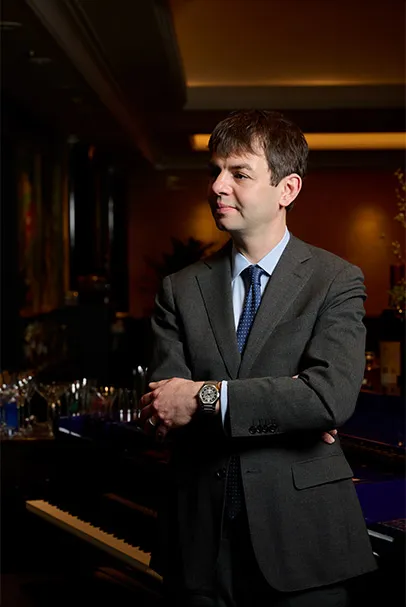
My attitude toward stage attire has also evolved with time. When I was younger, I didn’t pay much attention to it, but as I’ve grown older, I’ve come to think more carefully about how I present myself. I aim for a clean, refined look on stage. Wearing a suit is a way of showing respect for the music and for those who came before us. If you look back to the early days of jazz, musicians were always dressed in suits and ties. For me, performing means presenting myself in a polished and respectful way.
As precise as a metronome,
the “time” Shared by watches and music
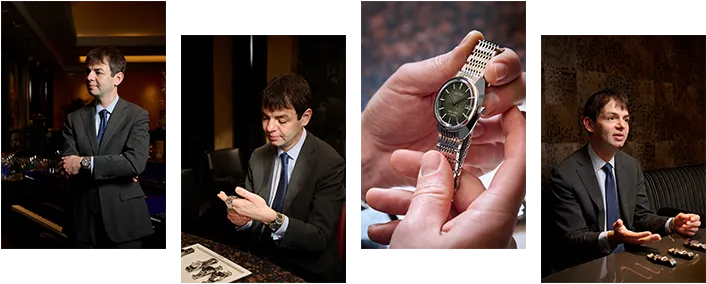
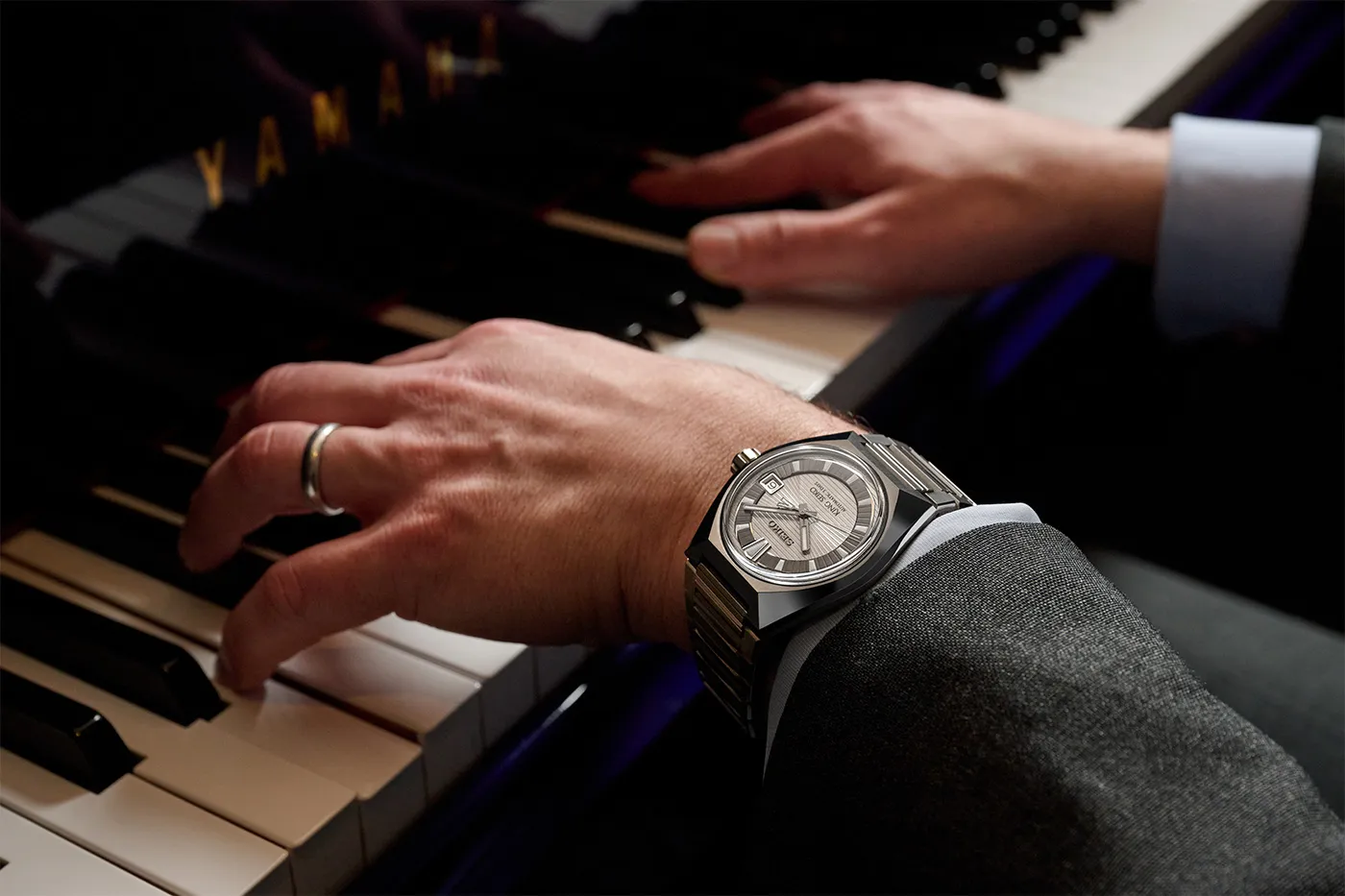
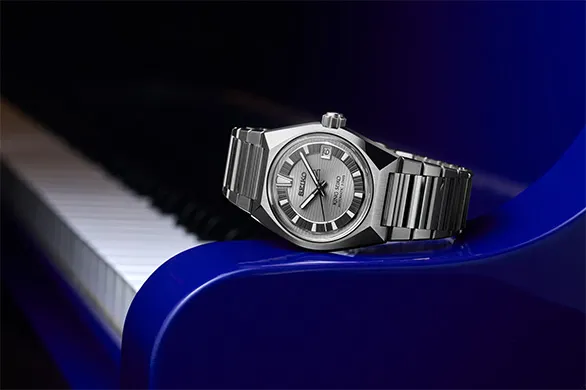
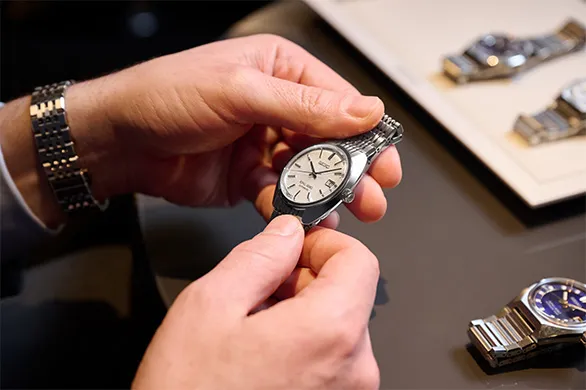
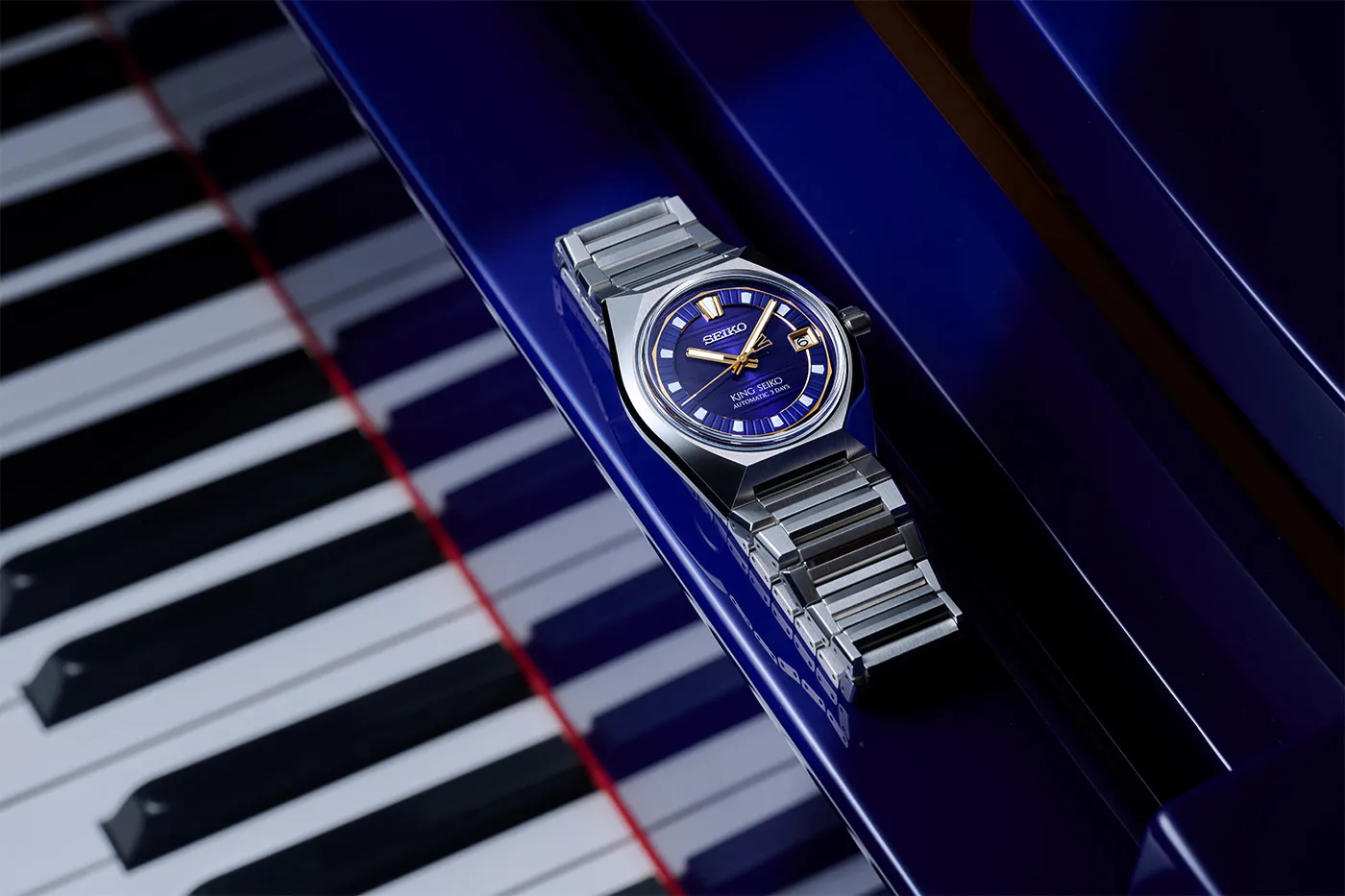
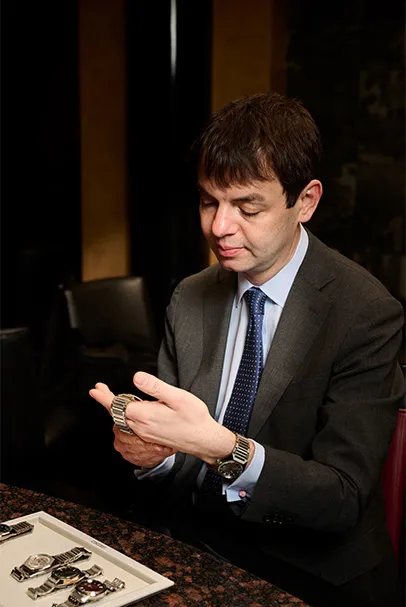
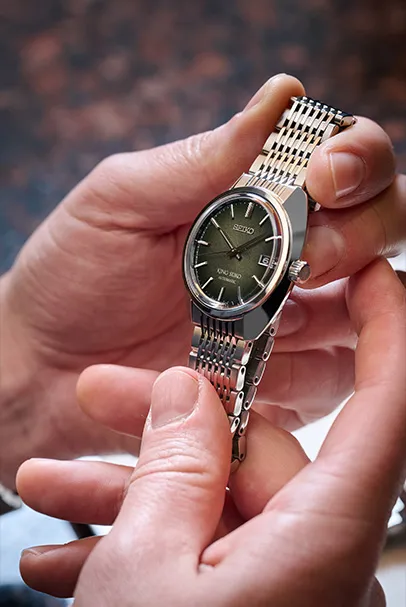
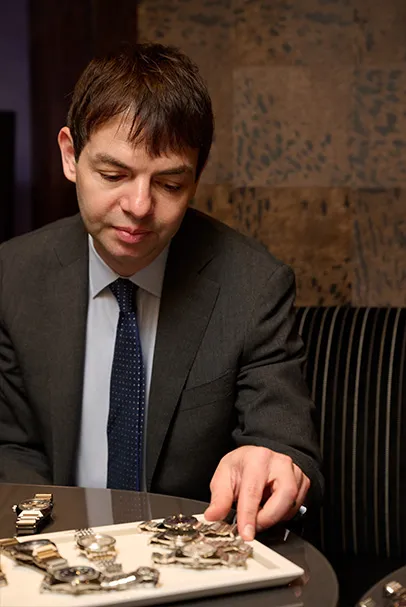
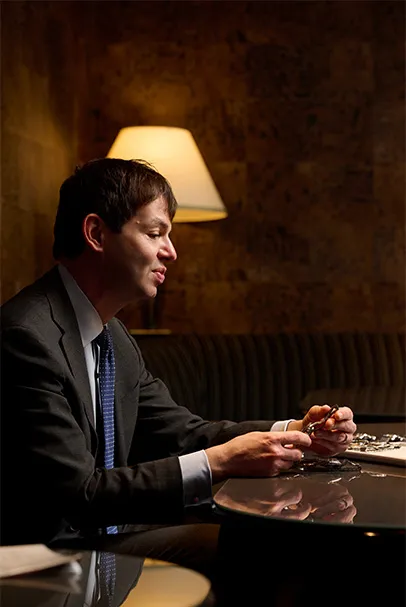
I had the opportunity to wear several King Seiko models this time. Among them, the KSK stood out as a piece that embodies an essential beauty despite its simplicity. I was particularly drawn to its neutral, classic presence. It never feels overly assertive, yet everything it needs is there—there’s a sense of perfectly achieved balance.
Another piece that caught my eye was the new titanium VANAC. It's bold, but really gorgeous. The fact that the surface is polished like a mirror is stunning. What also surprised me is how light it is. As a piano player, the lighter one is easier and more practical. The purple dial model was beautiful, too, but I don't really wear a lot of purple clothes, so a neutral color like titanium is better for me. When choosing, though, I definitely need some help from my wife—her opinion is the most valuable!
There's a lot of overlap between watches and music. The unwavering rhythm of a mechanical watch is exactly like a metronome. In music, "time" is everything.
Rhythm is paramount; you must not be late, but you also must not be too early. Continuing to exist at the exact right time (just in time) is critically important. Ticking time accurately in sync with the music completely mirrors the sincere attitude of being punctual and properly accomplishing things in life.
The choice to be "authentic"
and dedication to music
I am currently participating as an instructor in the Seiko Summer Jazz Camp. Working closely with a select group of just five students per instrument, I’m continually impressed by their deep respect for the music and their strong desire to learn.
Many former participants are already active in today’s jazz scene, and I’ve even had the opportunity to perform with some of them. It is truly an honor to be part of such an exceptional educational program.
Just as King Seiko has continued to pursue the true essence of watchmaking throughout its long history, we as musicians must ask ourselves what it means to be truly “authentic.”
I believe it has little to do with where you were born or raised. Rather, it’s about how deeply you immerse yourself in the culture and the language of the music—how far you’re willing to dedicate yourself until you can speak it freely.
Today, we live in an era where music from around the world can be learned online. Precisely because of that, it’s important not to imitate others, but to strive to become the best version of yourself. If you remain true to who you are and stay devoted to the music, it will inevitably reveal itself in your playing.
I believe that this is the one true path to becoming “authentic” in a way that transcends time.
 Back to Interview Top